
A05

Cognitive flexibility is the ability to adapt our behavior to a changing environment. It crucially depends on the prefrontal cortex. In our project, we are investigating whether and how the extracellular matrix, which surrounds neurons and determines the biophysical properties of the brain, contributes to the regulation of cognitive flexibility in mice and humans.
Principal Investigators & Co-Workers

Prof. Dr. Constanze Seidenbecher
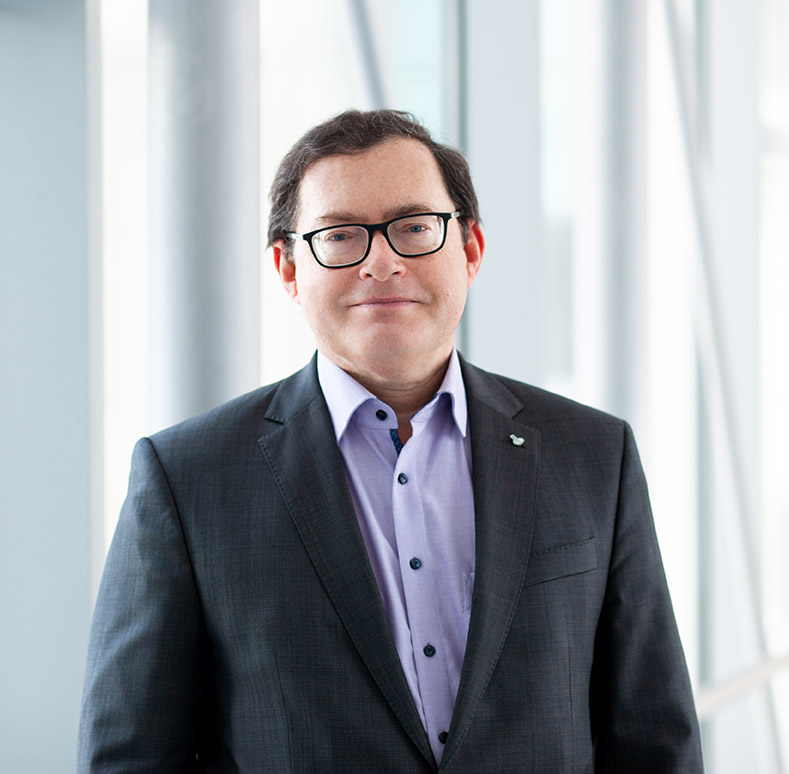
Prof. Dr. Alexander Dityatev

Dr. Dr. Björn Hendrik Schott
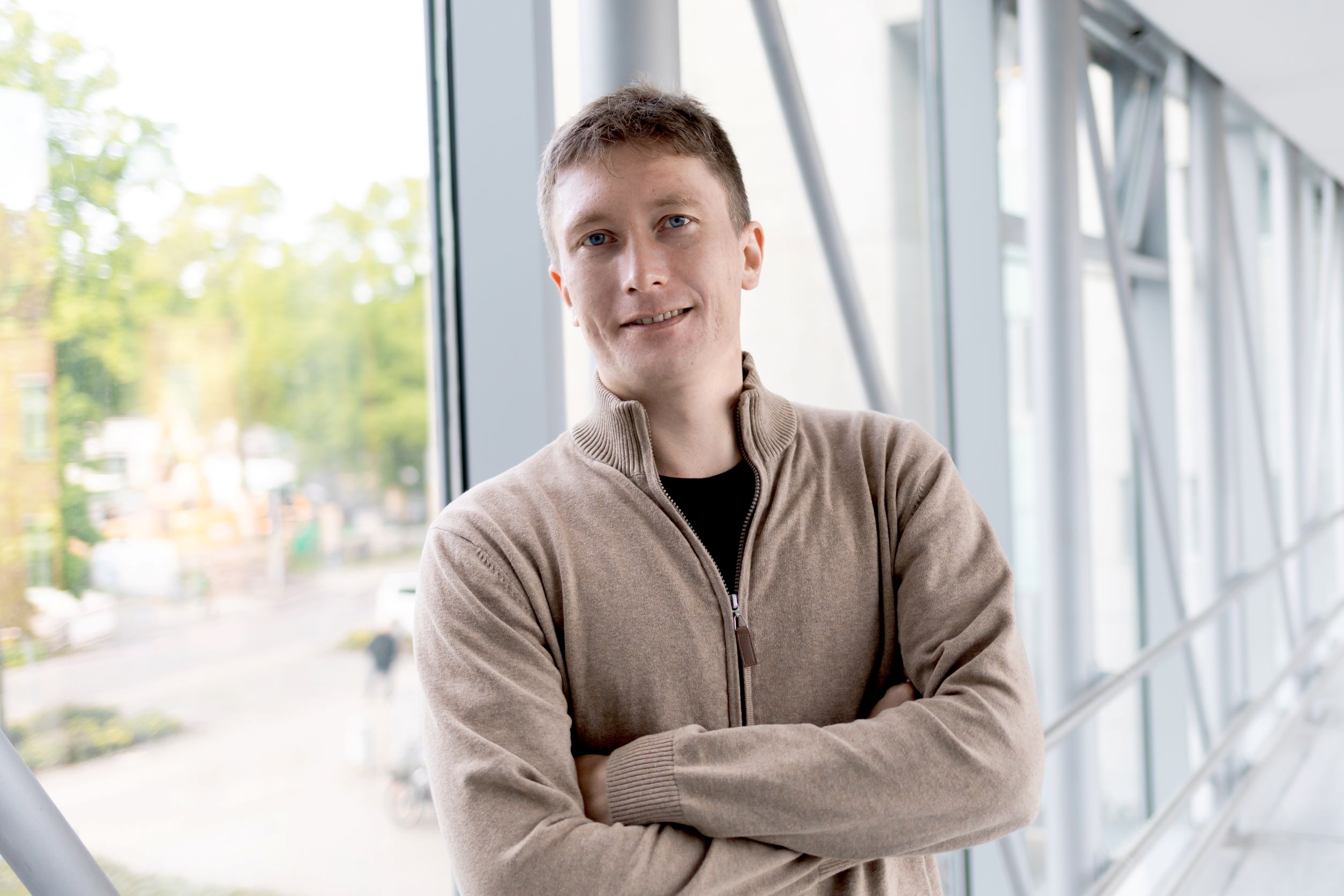
Dr. Stepan Aleshin

Margarita Darna

Annabell Ernst
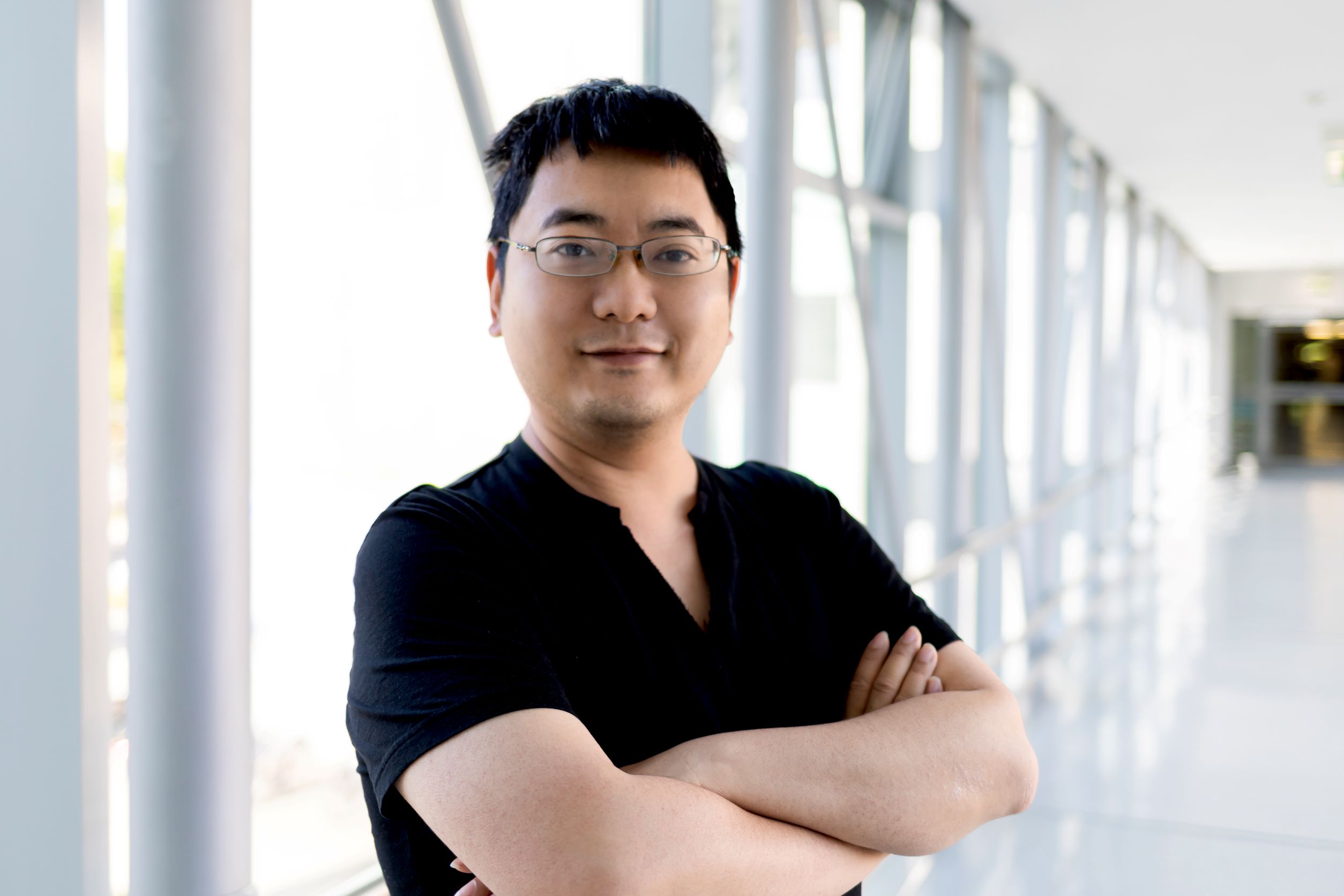
Shaobo Jia

Hadi Mirzapourdelavar
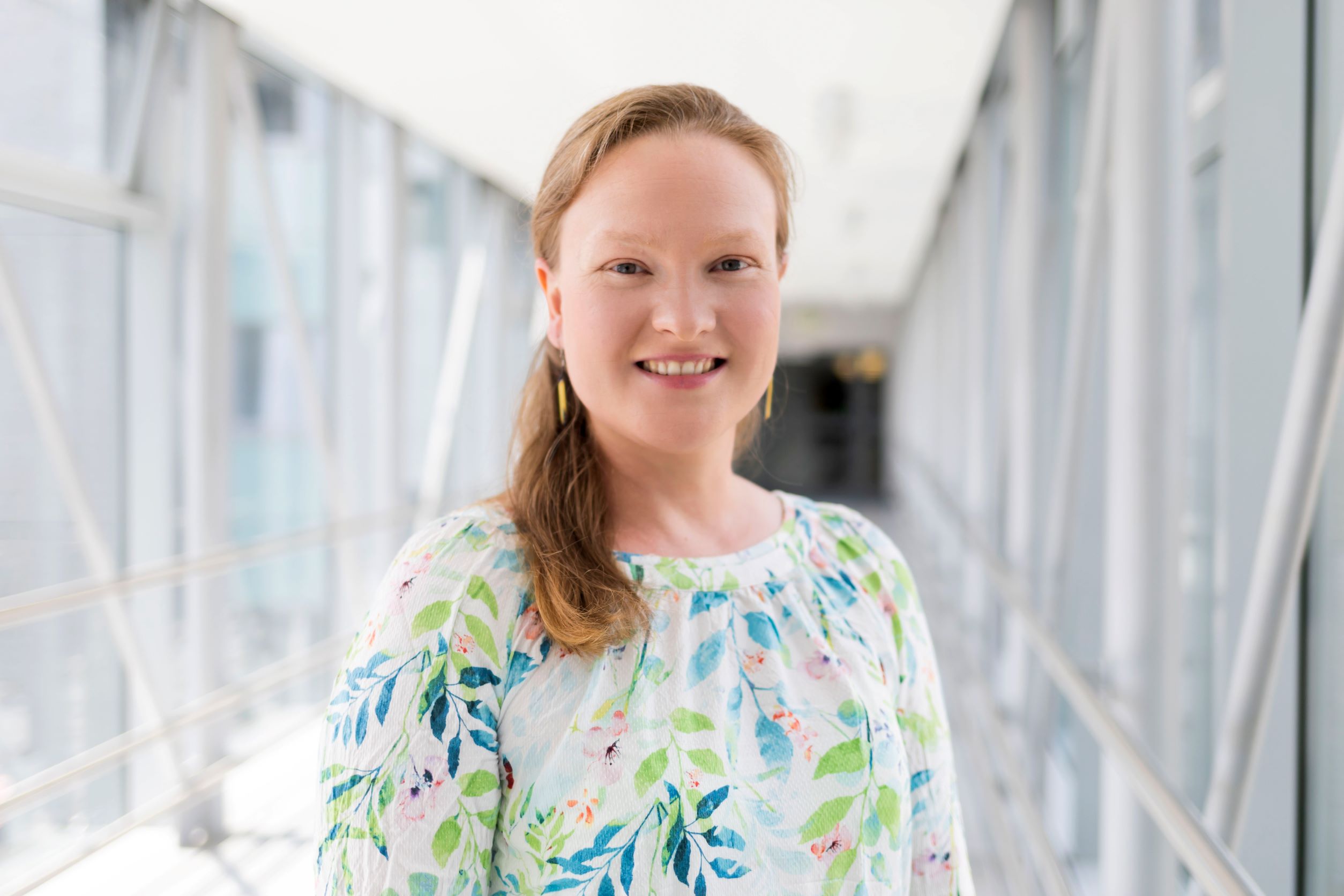
Dr. Anni Richter
What is the extracellular matrix?
The extracellular matrix (ECM) in the brain consists of a three-dimensional meshwork of macromolecules such as proteoglycans, glycoproteins and hyaluronic acid. These molecules are produced by neurons and glial cells and released into the extracellular space, where they form gel-like macrostructures. Especially around inhibitory parvalbumin-positive cells, so-called perineuronal nets are found as a specialization of the ECM, surrounding and isolating the synapses.
The goals of our project
We aim to investigate in rodents and humans the importance of the ECM in the frontal cortex as a neural resource for cognitive flexibility and the potential transfer of this output from one task to another. We are interested in whether changes in cognitive flexibility during aging are accompanied by changes in the matrix. In particular, we focus on the proteoglycans neurocan and brevican and the complex carbohydrate polysialic acid (PSA). Using young and older healthy humans and mice, we will perform attention tasks and virtual reality maze experiments. We want to find out if improvements in a particular test translate to other behavioral tasks.
Is there a correlation between brain activity and ECM composition?
The molecular composition of the neural ECM changes during maturation and aging of the brain as well as during diseases such as tumors, brain trauma, epilepsy, depression, schizophrenia, or neurodegenerative diseases (Ulbrich et al., 2021). ECM is also modulated depending on the activity state of healthy neuronal networks. For example, activation of dopamine receptors in neurons of the cerebral cortex leads to increased cleavage of ECM proteoglycans by extracellular proteases (Mitlöhner et al., 2020). When the neural ECM is experimentally degraded, the plastic properties of the brain change. For example, the cognitive flexibility of gerbils in an acoustic relearning task increases when the ECM in the auditory cortex is degraded prior to relearning (Happel et al., 2014).
Genetic variability in ECM-encoding genes
Throughout the genome, there are numerous polymorphic sites that make up our genetic variability, to which ECM-encoding genes are also subject. In the NCAN gene, which encodes the proteoglycan neurocan, there is a polymorphism that is considered a genome-wide risk factor for neuropsychiatric disorders such as schizophrenia and bipolar disorder. We have shown that this polymorphism correlates with memory performance and hippocampal activation patterns in a learning task and with gray matter density in the prefrontal cortex in healthy adults (Assmann et al., 2021).
Matrix-deficient mice
The molecular composition of the neural ECM changes during maturation and aging of the brain as well as during diseases such as tumors, brain trauma, epilepsy, depression, schizophrenia, or neurodegenerative diseases (Ulbrich et al., 2021). ECM is also modulated depending on the activity state of healthy neuronal networks. For example, activation of dopamine receptors in neurons of the cerebral cortex leads to increased cleavage of ECM proteoglycans by extracellular proteases (Mitlöhner et al., 2020). When the neural ECM is experimentally degraded, the plastic properties of the brain change. For example, the cognitive flexibility of gerbils in an acoustic relearning task increases when the ECM in the auditory cortex is degraded prior to relearning (Happel et al., 2014).
Matrix variability and cognitive flexibility in humans
Throughout the genome, there are numerous polymorphic sites that make up our genetic variability, to which ECM-encoding genes are also subject. In the NCAN gene, which encodes the proteoglycan neurocan, there is a polymorphism that is considered a genome-wide risk factor for neuropsychiatric disorders such as schizophrenia and bipolar disorder. We have shown that this polymorphism correlates with memory performance and hippocampal activation patterns in a learning task and with gray matter density in the prefrontal cortex in healthy adults (Assmann et al., 2021).
A glimpse into the future
By working in parallel with mice and humans, we aim to dissect the basic mechanisms of how the micro-environment of neurons in the frontal cortex may affect the capacity for cognitive flexibility. Detection of brain ECM components in serum from patients could provide insight into remodeling processes of the neural ECM in disease conditions associated with impaired cognitive flexibility and stimulate the development of pharmacological tools that help control matrix integrity in the brain.
Publications of the project A05
Anne Maass, Berta Garcia-Garcia, Niklas Behrenbruch, Beate Schumann-Werner, Eóin N. Molloy, Svenja Schwarck, Michael Rullmann, Anne Hochkeppler, Larissa Fischer, Anna-Therese Büchel, Jose Bernal, Niklas Vockert, Enise I. Incesoy, Wenzel Glanz, Michaela Butryn, Peter Schulze, Kathrin Baldauf, Andrew W. Stephens, Andreas Schildan, Marianne Patt, Gusalija Behnisch, Barbara Morgado, Hermann Esselmann, Constanze I. Seidenbecher, Björn H. Schott, Jens Wiltfang, Henryk Barthel, Osama Sabri, Michael C. Kreissl and Emrah Düzel
Inga Menze, Jose Bernal, Rogier A. Kievit, Kumar Parijat Tripathi, Timo Kaleck, Renat Yakupov, Slawek Altenstein, Claudia Bartels, Katharina Buerger, Michaela Butryn, Peter Dechent, Michael Ewers, Klaus Fliessbach, Ingo Frommann, Maria Gemenetzi, Wenzel Glanz, Daria Gref, Julian Hellmann-Regen, Stefan Hetzer, Enise I. Incesoy, Daniel Janowitz, Ingo Kiliman, Luca Kleineidam, Marie Theres Kronmüller, Christoph Laske, Debora Melo van Lent, Falk Lüsebrink, Robert Perneczky, Oliver Peters, Lukas Preis, Josef Priller, Boris-Stephan Rauchmann, Ayda Rostamzadeh, Sandra Roeske, Klaus Scheffler, Björn-Hendrik Schott, Anja Schneider, Sebastian Sodenkamp, Annika Spottke, Eike Jakob Spruth, Melina Stark, Stefan Teipel, Michael Wagner, Jens Wiltfang, Frank Jessen, Alfredo Ramirez, Stefanie Schreiber, Emrah Düzel & Gabriel Ziegler
Nat Commun (2026)
David Baidoe-Ansah, Hector Carceller, Hadi Mirzapourdelavar, Marta Pérez-Rando, Luisa Strackeljan, Borja Garcia-Vazquez, Constanze Seidenbecher, Rahul Kaushik, Juan Nacher & Alexander Dityatev
Kwok JCF, Dityatev A.
Margarita Darna, Anni Richter, Jens-Max Hopf, Constanze I. Seidenbecher, Björn H. Schott
Arndt P, Morton L, Briese M, Lämmlin N, Mattern H, Hasanuzzaman M, Westhues M, Khoshneviszadeh M, Appenzeller S, Gündel D, Toussaint M, Brust P, Kniess T, Oelschlegel A, Goldschmidt J, Meuth S, Müller P, Braun-Dullaeus R, Debska-Vielhaber G, Vielhaber S, Becker A, Dityatev A, Henneicke S, Sendtner M, Dunay I, Schreiber S.
EMBO Rep. (2026)
Cells (2026)
Singh JB, Perelló-Amorós B, Schneeberg J, Mirzapourdelavar H, Seidenbecher CI, Fejtová A, Dityatev A, Frischknecht R.
EMBO Rep. (2025)
Niklas Behrenbruch, Svenja Schwarck, Beate Schumann-Werner, Eóin N. Molloy,
Berta Garcia-Garcia, Anne Hochkeppler, Larissa Fischer, Anna-Therese Büchel, Enise I. Incesoy, Jose Bernal, Niklas Vockert, Patrick Müller, Gusalija Behnisch, Bárbara Morgado,
Hermann Esselmann, Constanze I. Seidenbecher, Björn H. Schott, Henryk Barthel, Osama Sabri, Jens Wiltfang, Michael C. Kreissl, Emrah Düzel & Anne Maass
Margarita Darna, Christopher Stolz, Hannah-Sophia Jauch, Hendrik Strumpf, Jens-Max Hopf, Constanze I. Seidenbecher, Björn H. Schott, Anni Richter
Baidoe-Ansah D, Mirzapourdelavar H, Aleshin S, Schott BH, Seidenbecher C, Kaushik R, Dityatev A.
Niklas Vockert, Judith Machts, Luca Kleineidam, Aditya Nemali, Hartmut Schütze, Renat Yakupov, Oliver Peters, Daria Gref, Luisa Sophie Schneider, Lukas Preis, Josef Priller, Eike Jakob Spruth, Slawek Altenstein, Anja Schneider, Klaus Fliessbach, Jens Wiltfang, Ayda Rostamzadeh, Wenzel Glanz, Enise I. Incesoy, Stefan Teipel, Ingo Kilimann, Doreen Goerss, Christoph Laske, Matthias H. Munk, Annika Spottke, Nina Roy, Michael T. Heneka, Frederic Brosseron, Michael Wagner, Steffen Wolfsgruber, Laura Dobisch, Peter Dechent, Stefan Hetzer, Klaus Scheffler, Peter Zeidman, Yaakov Stern, Björn H.Schott, Frank Jessen, Emrah Düzel, Anne Maass, Gabriel Ziegler, the DELCODE study group
Soch J, Richter A, Kizilirmak JM, Schütze H, Ziegler G, Altenstein S, Brosseron F, Fliessbach K, Freiesleben SD, Glanz W, Gref D, Heneka MT, Incesoy EI, Kilimann I, Kimmich O, Laske C, Lohse A, Lüsebrink F, Munk MH, Peters O, Preis L, Priller J, Ramirez A, Roeske S, Rostamzadeh A, Roy-Kluth N, Schneider A, Spottke A, Spruth EJ, Teipel S, Wiltfang J, Jessen F, Wagner M, Düzel E, Schott BH
Alexander Dityatev
Soch J, Richter A, Kizilirmak JM, Schütze H, Altenstein S, Dechent P, Fliessbach K, Glanz W, Herrera AL, Hetzer S, Incesoy EI, Kilimann I, Kimmich O, Lammerding D, Laske C, Lohse A, Lüsebrink F, Munk MH, Peters O, Preis L, Priller J, Rostamzadeh A, Roy-Kluth N, Scheffler K, Schneider A, Spottke A, Spruth EJ, Teipel S, Wiltfang J, Jessen F, Düzel E, Schott BH
Seiler S, Rudolf F, Gomes FR, Pavlovic A, Nebel J, Seidenbecher CI, Foo LC
Margarita Darna, Christopher Stolz, Hannah-Sophia Jauch, Hendrik Strumpf, Jens-Max Hopf, Constanze I. Seidenbecher, Björn H. Schott, Anni Richter