
B05

Societies of today demand communication speed and density which particularly taxes our capability of tracking visual input in parallel. This capability declines with age and degenerative brain disease. Here we investigate the cortical limits on parallel processing, guided by the hypothesis that those limits arise from the speed and efficiency of cycling through representations in the visual cortex hierarchy, and by structural factors like intracortical myelination linking hierarchical levels. Parallel processing shows a hemisphere specialization for object- and location-based tracking which we investigate by perturbating underlying circuits with transcranial magnetic stimulation. We finally investigate the trainability of parallel tracking as a function of the presence or absence of tau-pathology in a group of elderly subjects.
Principal Investigators
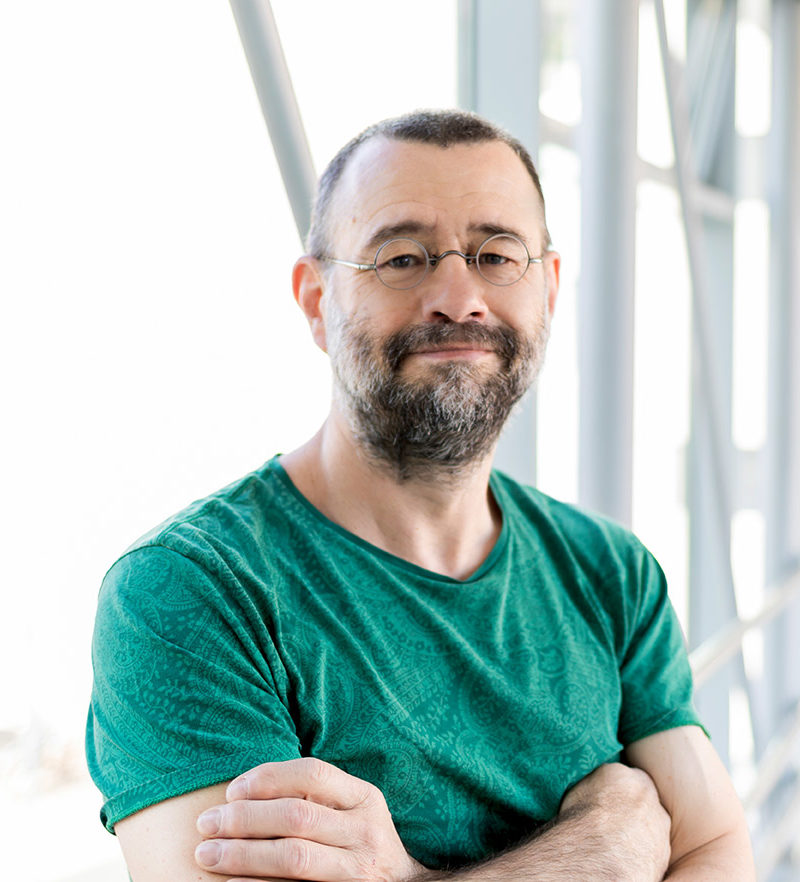
Prof. Dr. med. Jens-Max Hopf

Prof. Dr. med. Mircea Ariel Schoenfeld
Prof. Dr. med. Jens-Max Hopf
Jens- Max Hopf is the head of the Cognitive Neurophysiology Group and chair for Cognitive Neurophysiology at the medical faculty of the Otto-von-Guericke University Magdeburg. He is also head of the guest-research group visual attention at the Leibniz Institute for Neurobiology in Magdeburg. His research focuses on mechanism underlying attentional selection in human visual cortex using non-invasive neuroimaging methods, including electromagnetic brain recordings (MEG/EEG) and functional MRI.
Prof. Dr. med. Mircea Ariel Schoenfeld
Ariel Schoenfeld is the head of the experimental neurology group and chair for experimental neurology and functional neuroimaging at the medical faculty of the Otto-von-Guericke University Magdeburg. He is also medical director of the Kliniken Schmieder hospital in Heidelberg. He focusses on the neural mechanisms of perception and attention in the visual domain in health and disease with a special emphasis on these processes in patients with lesions within the CNS. The research addresses basic science as well as clinical-pathological aspects using multimodal structural and functional neuroimaging (structural and functional MRI, EEG and MEG) methods.
Co-Workers
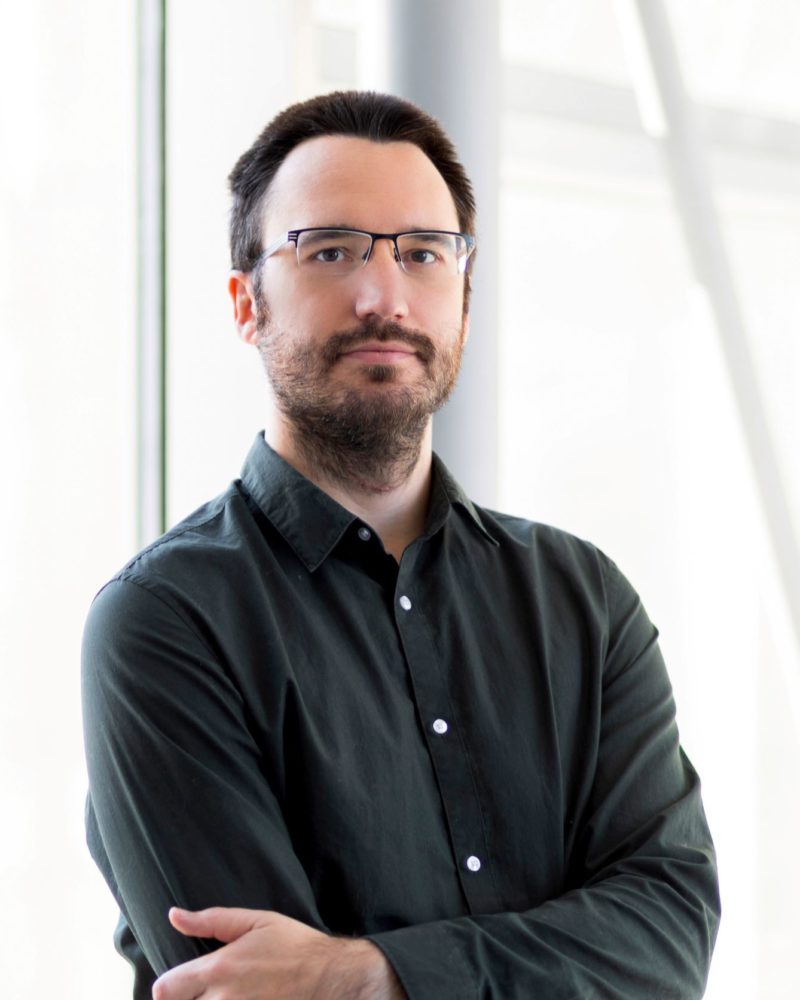
Dr. Christian Merkel

Nadine Schönemann
Speed of attentional allocation as a limit of parallel processing
According to our central working hypothesis, subjects cannot attend multiple feature-values of an object (like different colors) at a time. Instead, they are focused one at a time in fast cycles. This cycling of attention through the feature values gives an impression of simultaneous processing. In essence, however, parallel processing would be a serial cycling process, whose limits are set by the speed of the cycle. There is a clear link between neural myelination and the speed and accuracy of neural transmission, hence our goal to clarify the relation between cortical myelination and the efficiency of parallel processing.
Visual attention
We conceive of visual attention as the ability to scrutinize and select details of a visual scene with preference. This has the beneficial effect of better and faster detection, processing, and release of action. It is also possible to scrutinize and select items away from gaze (outside foveal vision), which is referred to a covert visual attention. Attention can be allocated to objects, locations, and features, which is called objects-based, space-based, and feature-based attention, respectively.
Object Tracking
Visual attention plays a huge role in more natural environments of daily life. Hereby, scenes are more dynamic and complex compared to the ‚laboratory’. However, we are still able to navigate in such an environment by being able to attend multiple dynamic pieces of visual information simultaneously. Research shows that up to 4 or 5 visual objects can be captured by attention and that subjects are able to track that information not just through their location within the visual field but many other visual properties.
Object Tracking as a cognitive resource
The ability to track multiple objects over time within our visual environment is an indicator of cognitive health. High functioning cognitive individuals show high scores in object tracking tasks. Research shows that exercising object tracking can increase general visual cognitive performance and maintain cognitive flexibility.

Goals of our Project
This project seeks to clarify the mechanisms and limitations that underlie the flexible cognitive resource allocation in situations where multiple visual input streams need to be simultaneously processed like when navigating highly dynamic visual scenes. We aim at pinpointing the cortical structures and understand the role and speed of cyclic resource allocation of attention as a limit of parallel processing. In addition, we seek to characterize the relation between cortical myelination and the efficiency of parallel processing in MOT and FMT. of These processes will be investigated as a function of age. The potential of the skill of tracking multiple objects/features to retain cognitive flexibility in old age is being examined.
Publications of the project B05
Margarita Darna, Anni Richter, Jens-Max Hopf, Constanze I. Seidenbecher, Björn H. Schott
Christian Merkel, Matthias Merkel, Jens-Max Hopf, and Mircea Ariel Schoenfeld
Margarita Darna, Christopher Stolz, Hannah-Sophia Jauch, Hendrik Strumpf, Jens-Max Hopf, Constanze I. Seidenbecher, Björn H. Schott, Anni Richter
Anna-Maria Felßberg, Nadine Schönemann, Jens-Max Hopf, Mircea Ariel Schoenfeld, Christian Merkel
Christian Merkel, Jens-Max Hopf and Mircea Ariel Schoenfeld
Christian Merkel, Luise Burgmann, Mandy Viktoria Bartsch, Mircea Ariel Schoenfeld, Jens-Max Hopf
Mandy V Bartsch, Christian Merkel, Hendrik Strumpf, Mircea A Schoenfeld, John K Tsotsos, Jens-Max Hopf
Camila Silveira Agostino, Christian Merkel, Felix Ball, Peter Vavra, Hermann Hinrichs, Toemme Noesselt
Christian Merkel, Jens-Max Hopf, Mircea Ariel Schoenfeld